
Alternative Provision
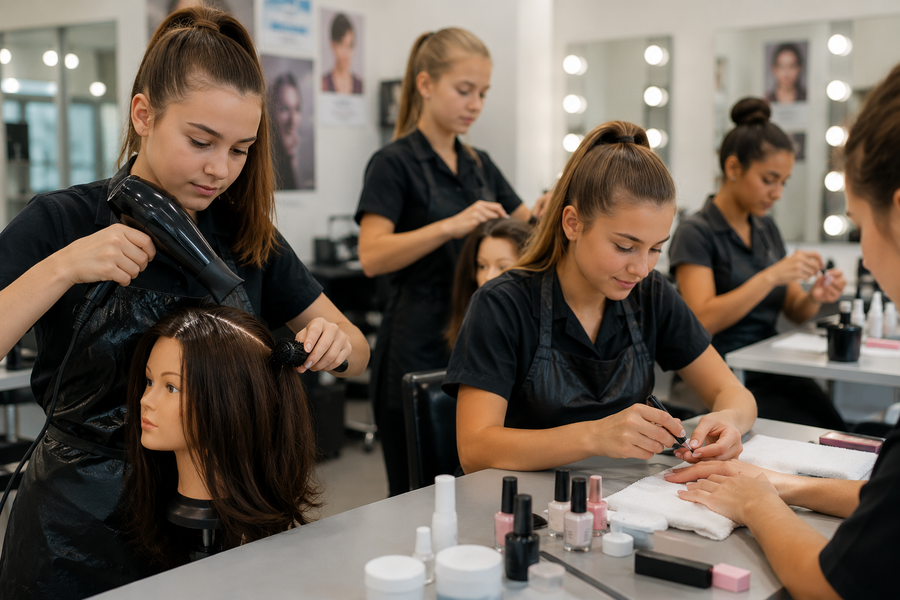
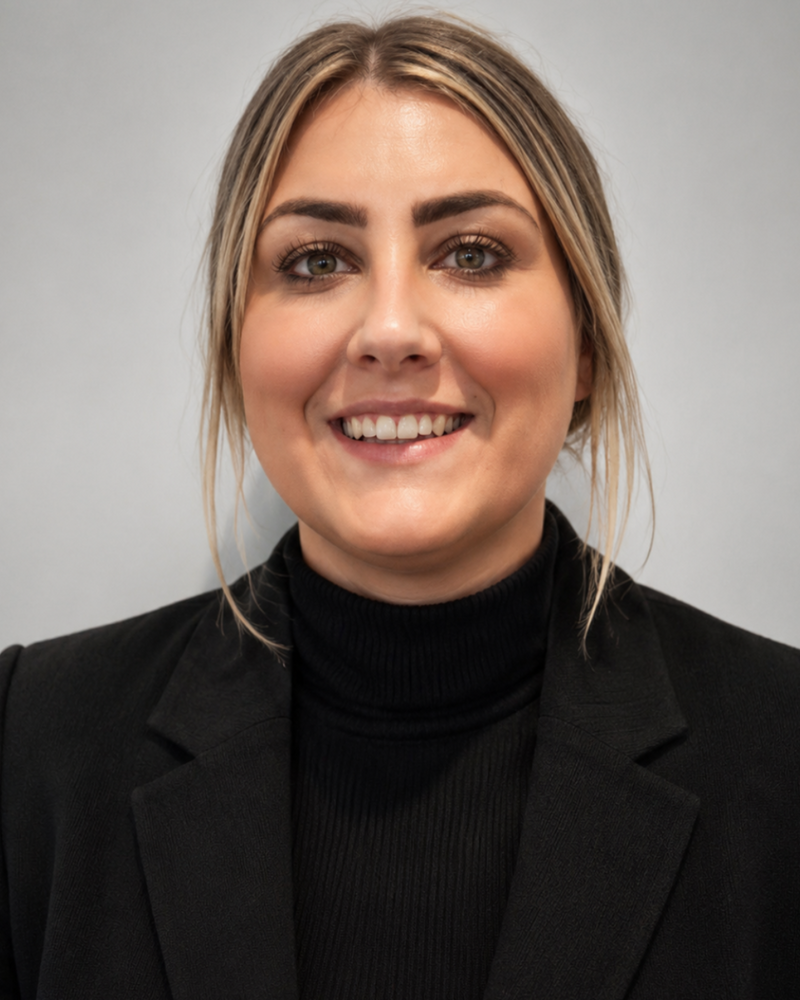
Every young person who walks through our door is met with patience, kindness and a plan built just for them. Watching a young person who'd given up on school start to believe in themselves again — that's why we do this.
Our door is always open to families, schools and local authorities. If you're worried about a young person, talk to us — we'll find the right way forward together.
Real qualifications, from Year 9 to Year 11
Every young person works towards nationally recognised, Ofqual-regulated qualifications in hair and beauty — awarded by Open Awards and built up year by year as they grow in confidence and skill.
All of our Alternative Provision qualifications are regulated by Ofqual and sit on the Regulated Qualifications Framework (RQF) — real credentials that count.
Hair & Beauty Skills
Years 9 & 10Open Awards Entry Level Award in Hair and Beauty Skills (Entry 3)
An introduction to hair and beauty — building practical skills, salon safety and confidence in a supportive, hands-on setting.
Open Awards Entry Level Certificate in Hair and Beauty Skills (Entry 3)
A broader qualification covering more hair and beauty skills, giving learners a wider foundation to build on into Year 11.
Hair & Beauty Skills
Year 11Open Awards Level 1 Award in Hair and Beauty Skills
Building on Entry Level, learners develop more advanced hair and beauty techniques and the professional standards of a working salon.
Open Awards Level 1 Certificate in Hair and Beauty Skills
Our fullest Level 1 qualification — a strong, recognised foundation to progress into further study, including our Post-16 provision.
Enrichment & personal development
Alongside their qualifications, every young person takes part in a full enrichment and personal development programme — because education is about far more than exams. It's how we keep young people safe, build confidence, and prepare them for life.
Safeguarding
Keeping every young person safe from harm is our highest priority — woven through everything we do.
Prevent
Protecting young people from radicalisation and extremism, and knowing how to raise a concern.
Radicalisation
Recognising the signs and building resilience against harmful and extreme influences.
Exploitation
Awareness of criminal and sexual exploitation, including county lines, so young people stay safe.
British Values
Exploring democracy, the rule of law, individual liberty, and mutual respect and tolerance — helping young people truly understand the values Britain is built on, and grow into confident, well-rounded individuals.
Hate Crime
Understanding, challenging and reporting prejudice so everyone feels respected and included.
Drugs Awareness
Honest education on the risks of drugs and alcohol, and where to turn for help.
Sexual Orientation & Gender Identity
Fostering understanding, acceptance and respect for all identities.
Gender-Based Violence
Recognising abuse and controlling behaviour, and promoting healthy, equal relationships.
Domestic Abuse
Spotting the signs, knowing it's never okay, and understanding where support is available.
Bullying & Cyber Bullying
Preventing bullying in all its forms and giving young people the confidence to speak out.
Internet Safety
Staying safe online, protecting personal information and using social media responsibly.
Mental Health
Building emotional resilience, reducing stigma and knowing how and where to seek support.
Knife Crime
Understanding the dangers and consequences, and making safe, positive choices.
Relationships
Developing healthy, respectful relationships and understanding consent and boundaries.
Why it matters
For young people who've often faced significant challenges, this personal development work is vital. It keeps them safe, builds resilience and self-worth, helps them understand the world around them, and gives them the knowledge and confidence to make positive choices — now and into adulthood.
Supporting young people who learn differently
We welcome young people who benefit from a smaller, calmer, more personal setting.
Struggling in mainstream
Young people who find it hard to sustain a place in a mainstream school and need a smaller, calmer, more personal setting.
SEMH needs
Young people with social, emotional and mental health needs, supported in a nurturing environment where they feel safe and understood.
Special educational needs (SEN)
Young people with special educational needs who thrive with a tailored, individual approach built around them.
A simple, supportive route in
From referral to a tailored timetable — here's how a young person joins us.
A school makes a referral
A local school refers a young person into our provision via our online referral application form.
We assess & invite them in
We assess every application, then invite the young person — with their parent and/or a member of school staff — to look around, meet us, and talk openly about their barriers and how we can help.
We build their plan
Together, our Senior Leadership Team devises a personalised plan built around the young person's needs, and agrees a start date.
We liaise with school
We stay in close contact with the referring school, keeping them updated on the outcome and how the young person is settling in.
Every placement starts with a simple conversation — there's no obligation. We'll arrange a visit so the young person and their family can meet the team and see the setting before anything is agreed, and we stay in close contact with the referring school or local authority throughout, so no one is ever left wondering how things are going.
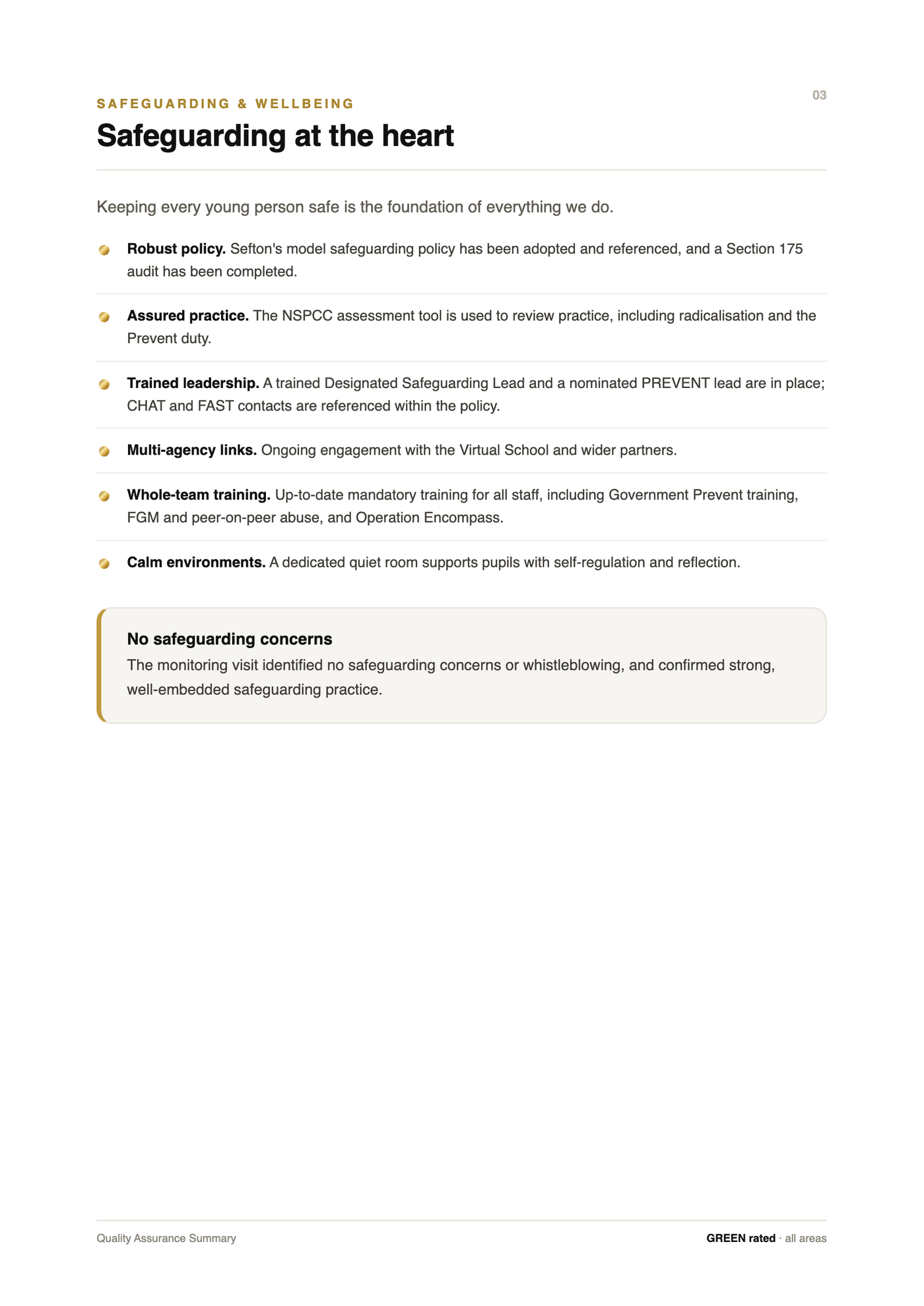
Wellbeing and safeguarding at the heart
Every young person is known by name and supported as an individual. Our team is trained in safeguarding and pastoral care, and we work closely with families, schools and local authorities to keep every learner safe, settled and making progress.
Provision you can trust
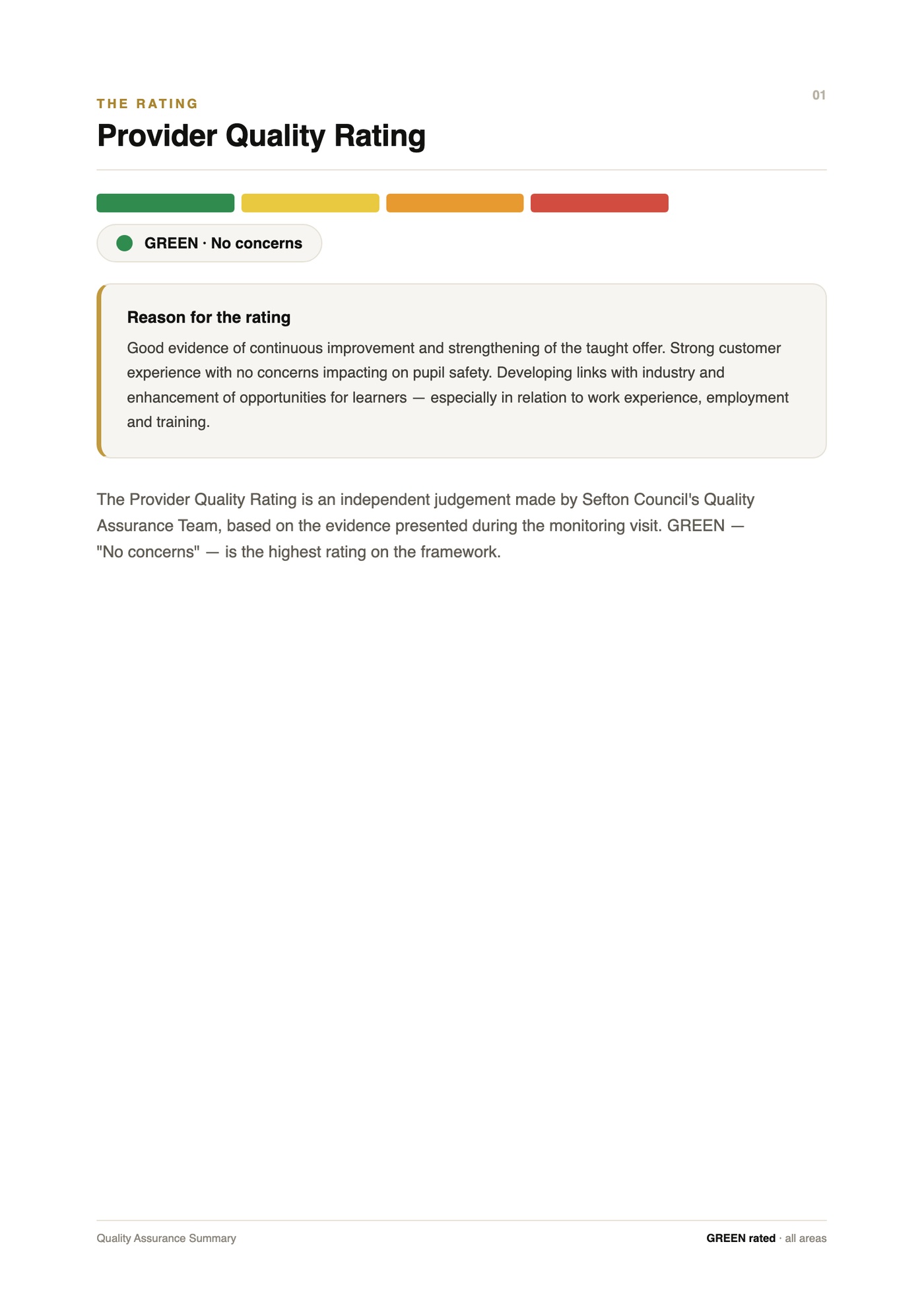
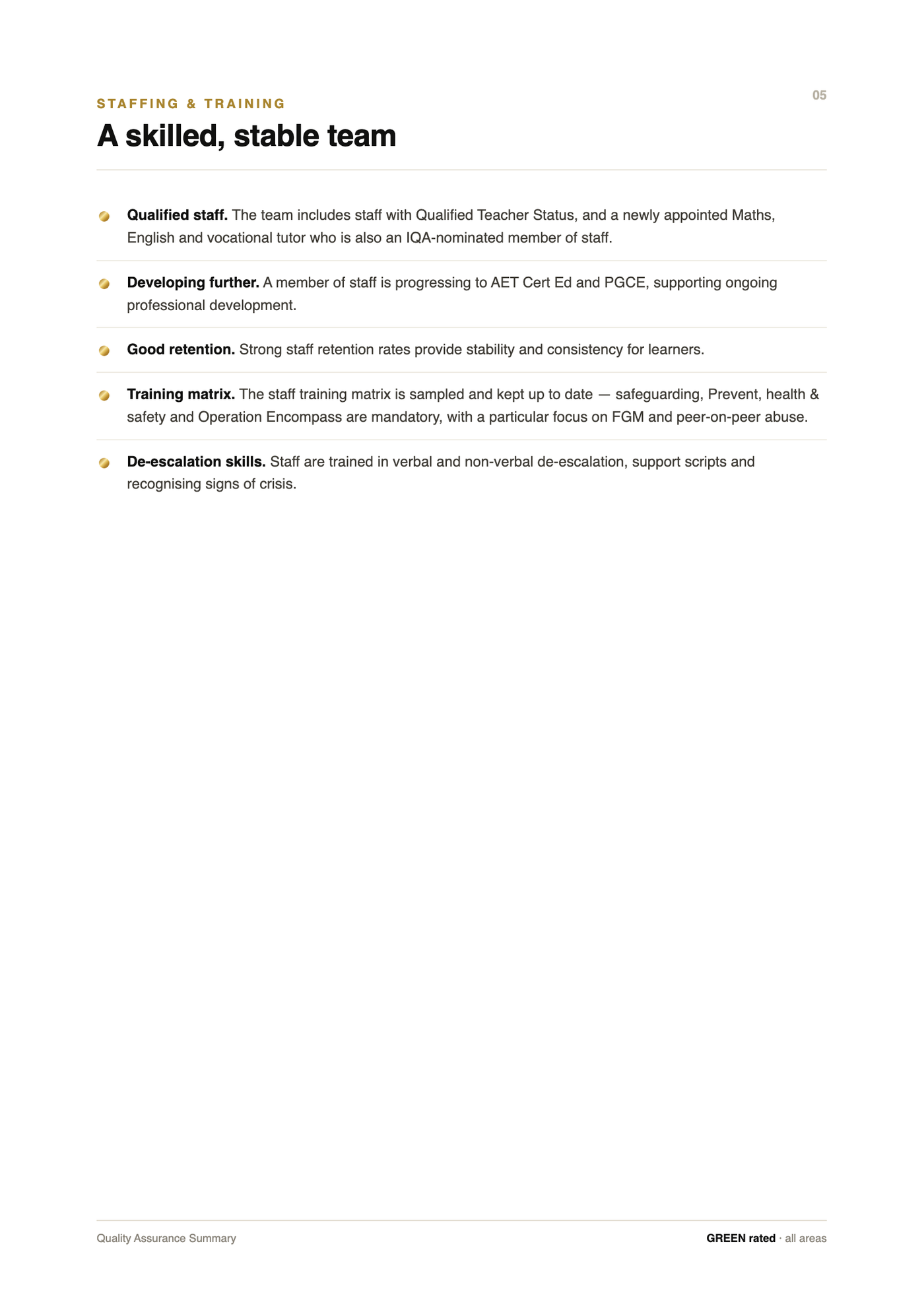
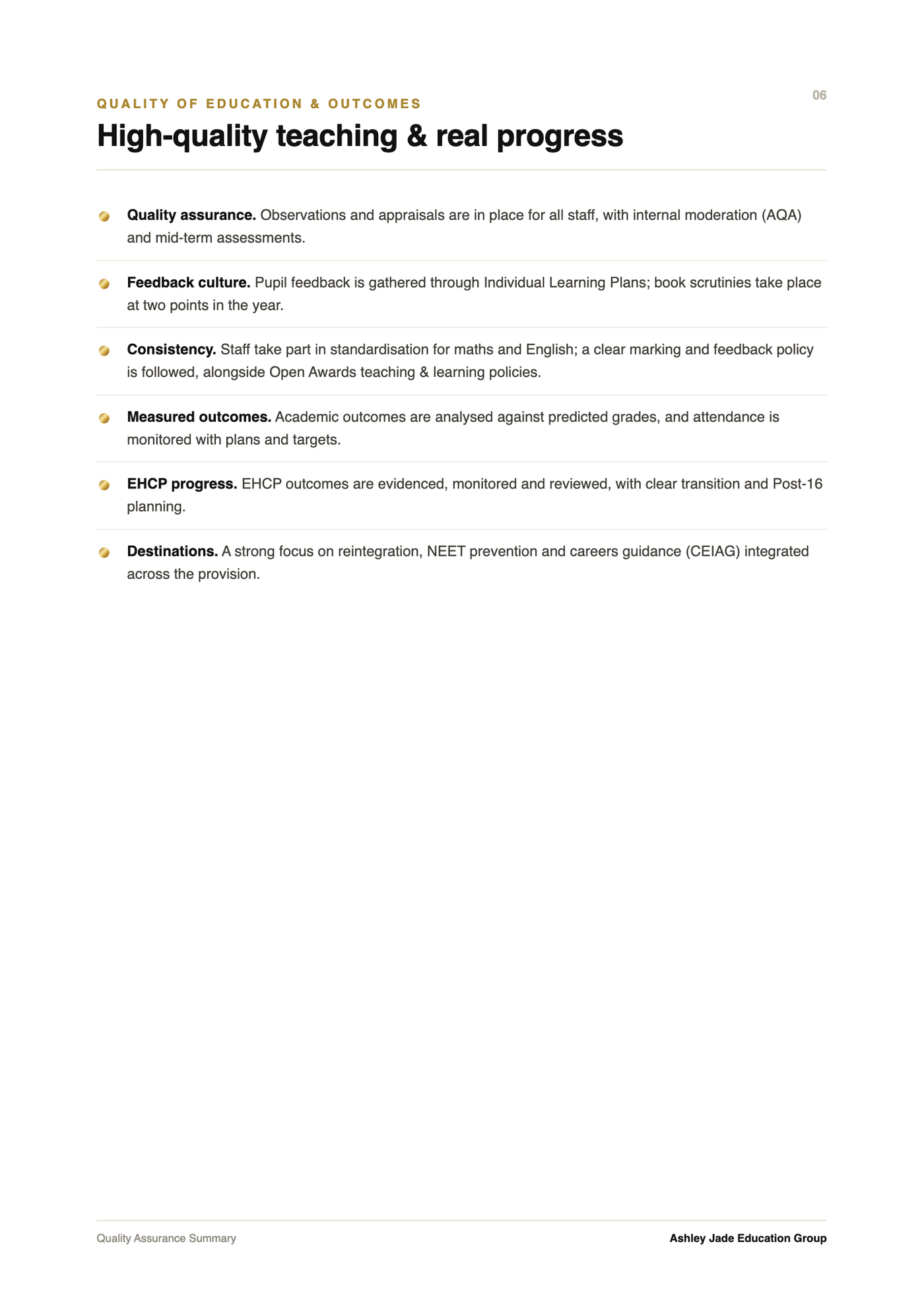
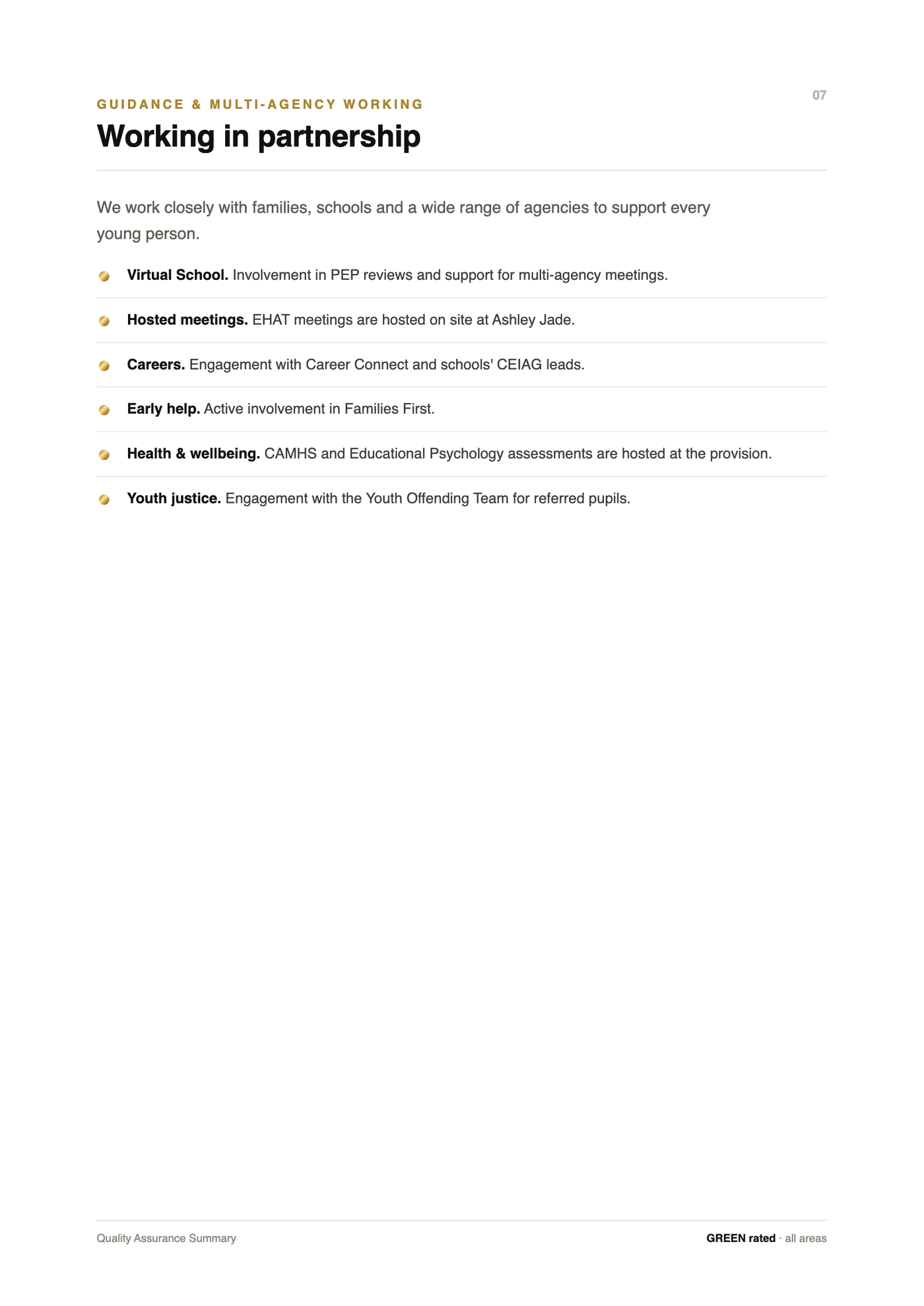
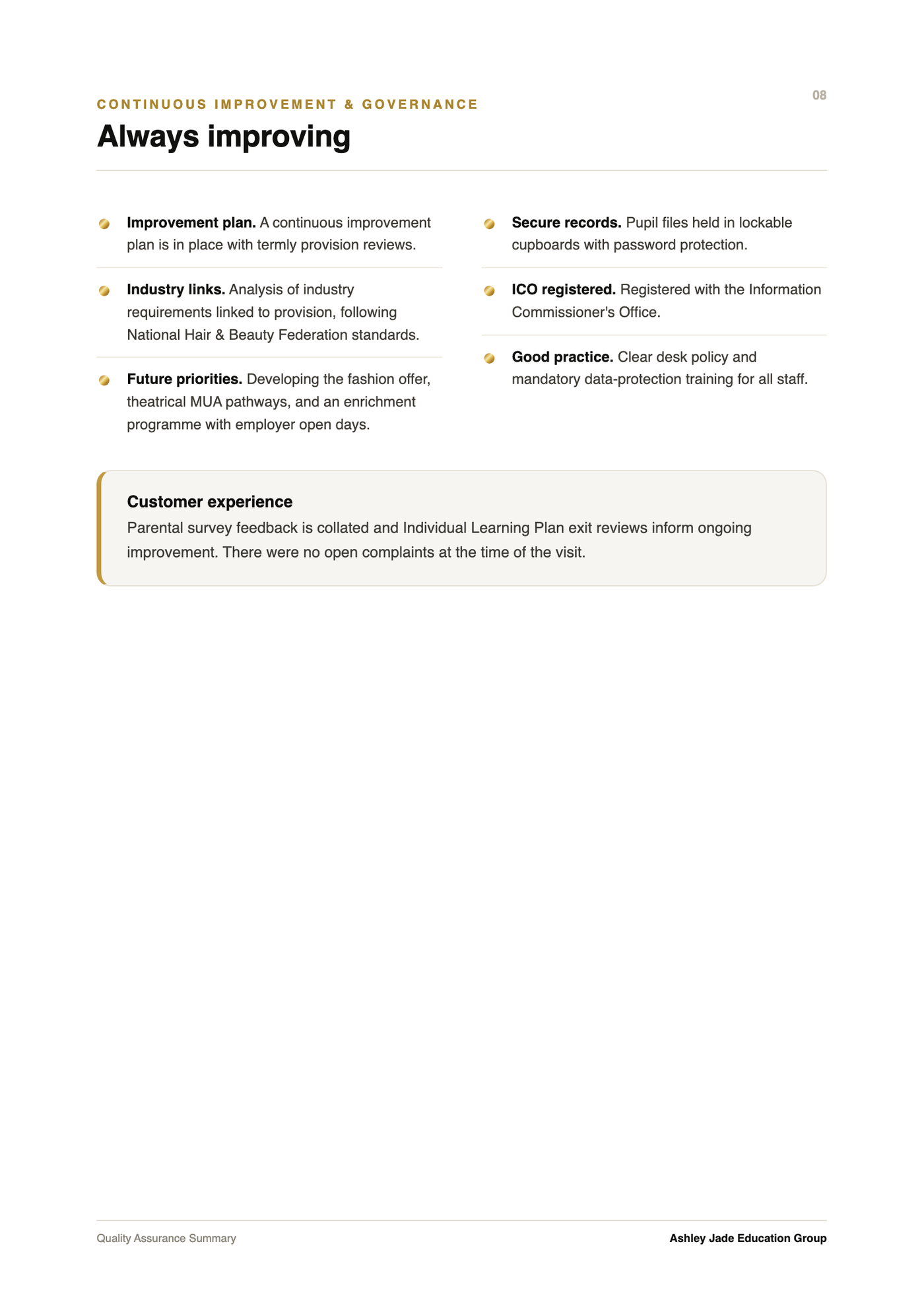
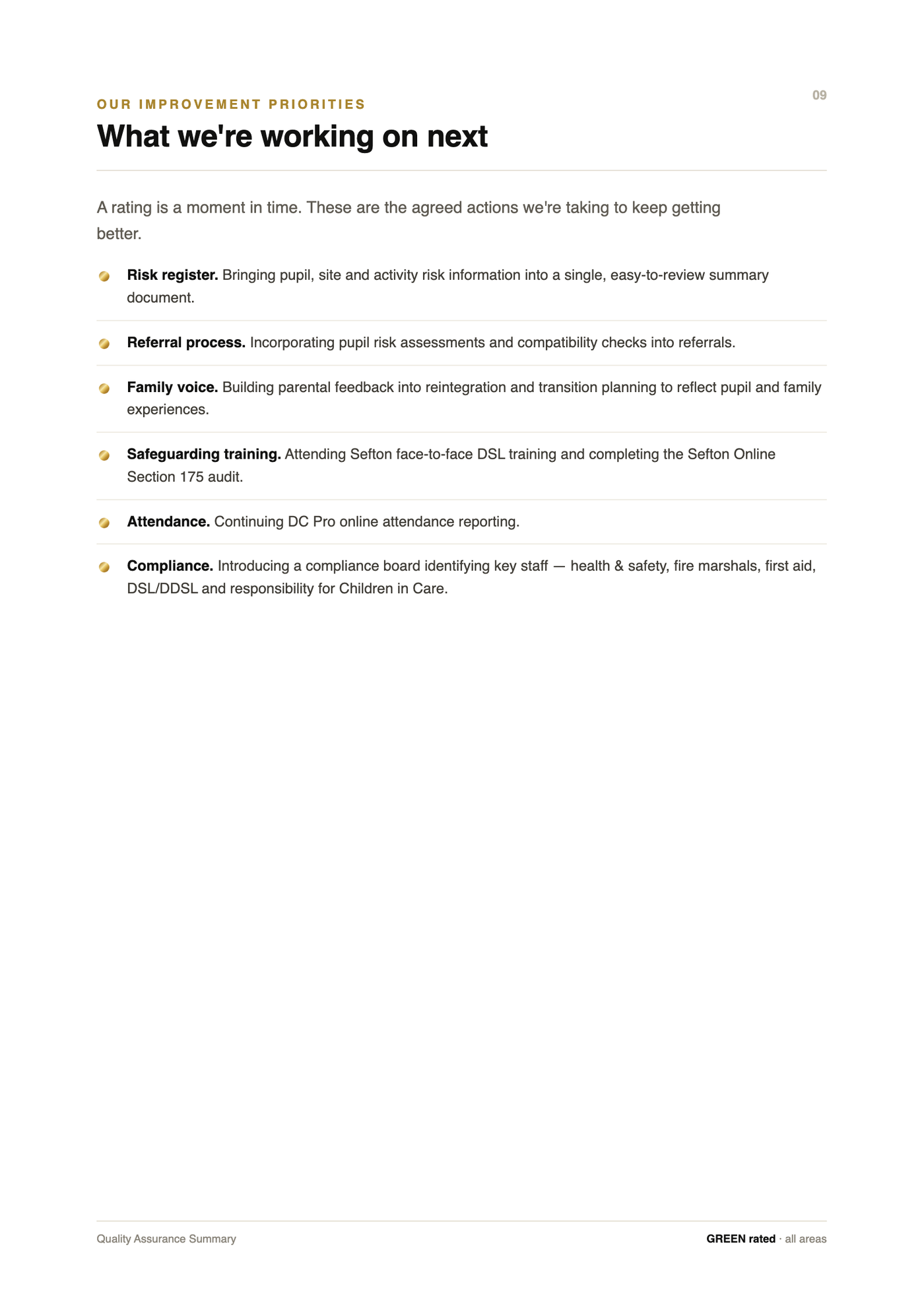
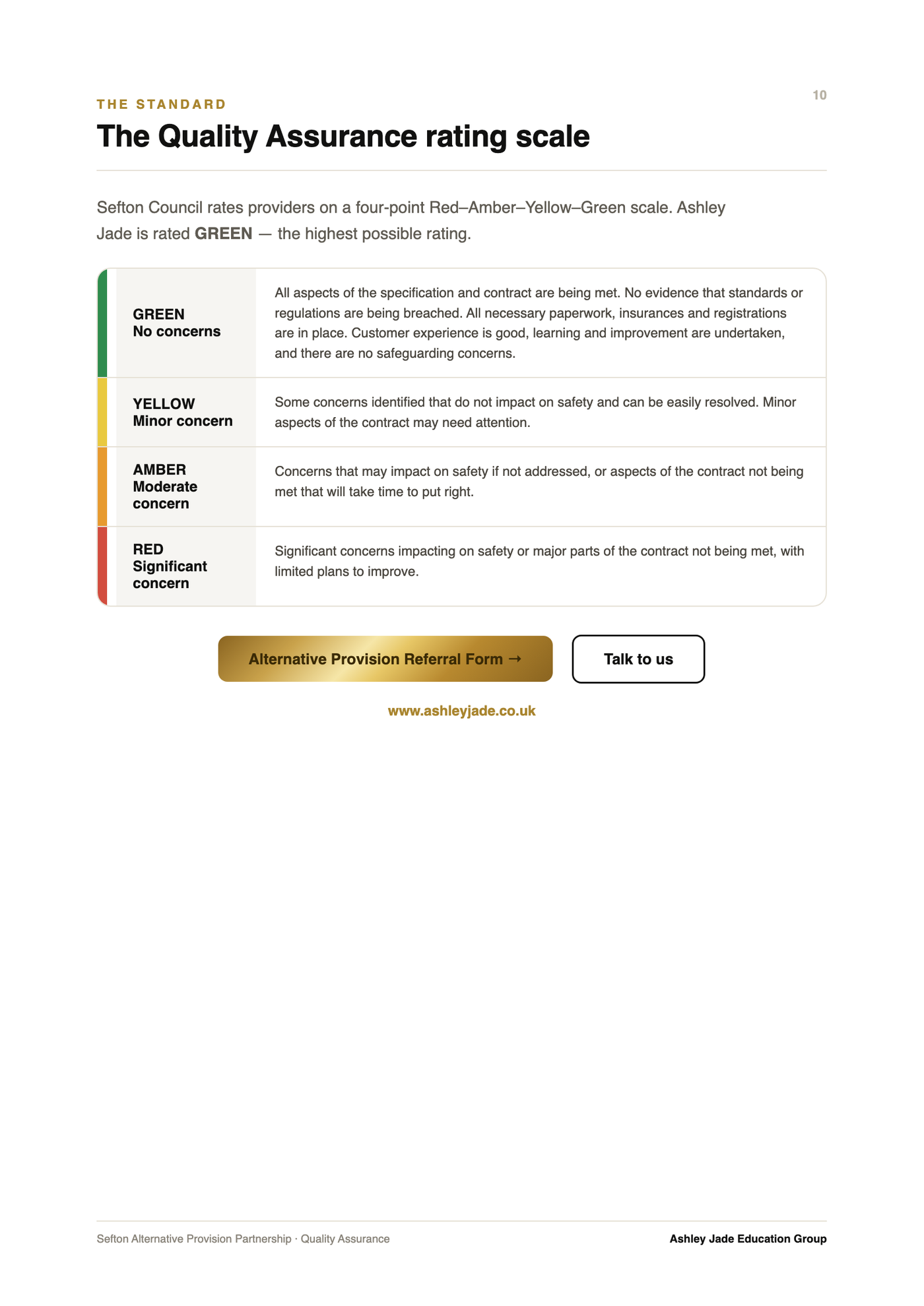
Rated GREEN across all areas
Independently assured provision — the highest standard for alternative education, recognised by our local authority partners.
Read our latest report
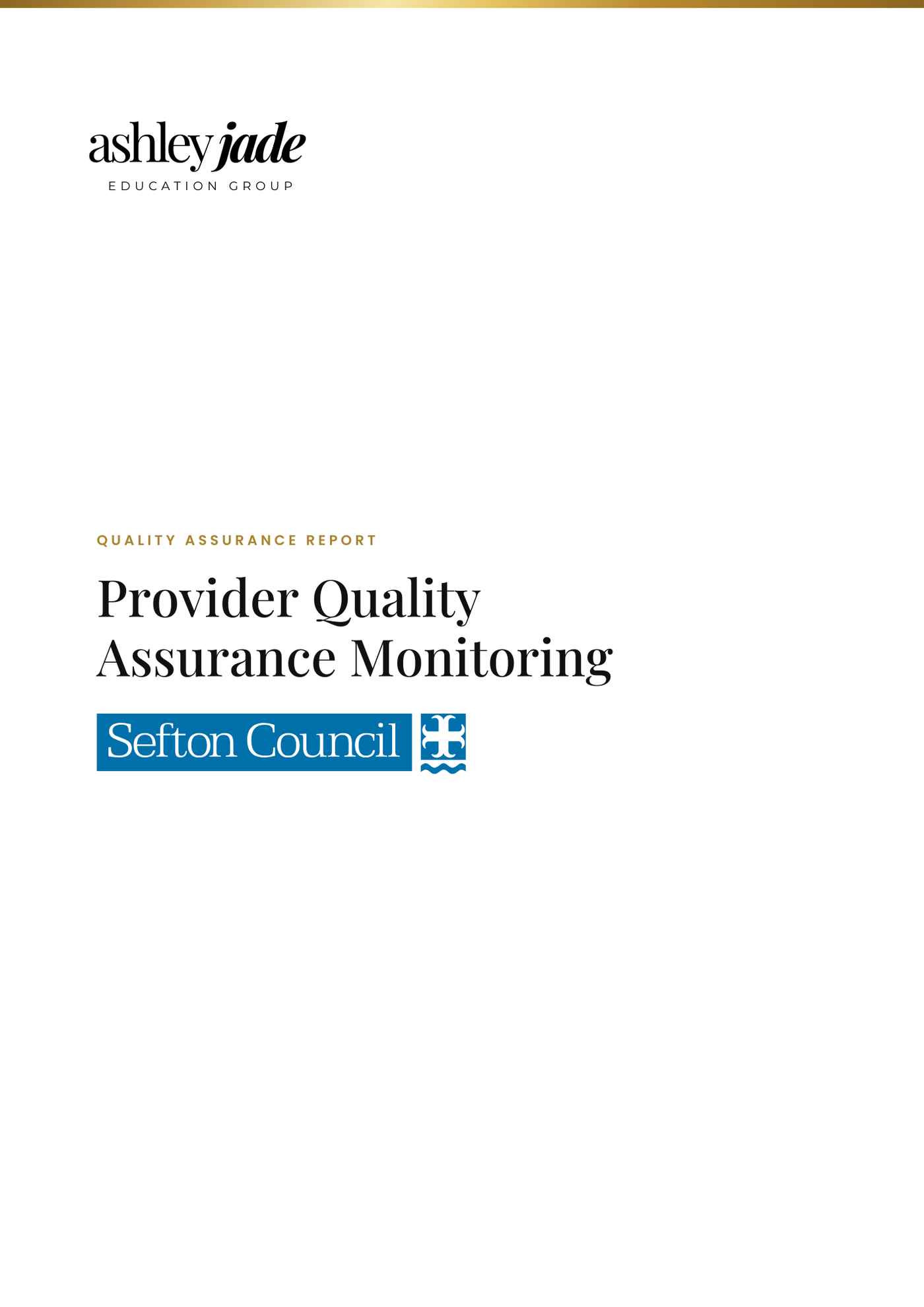
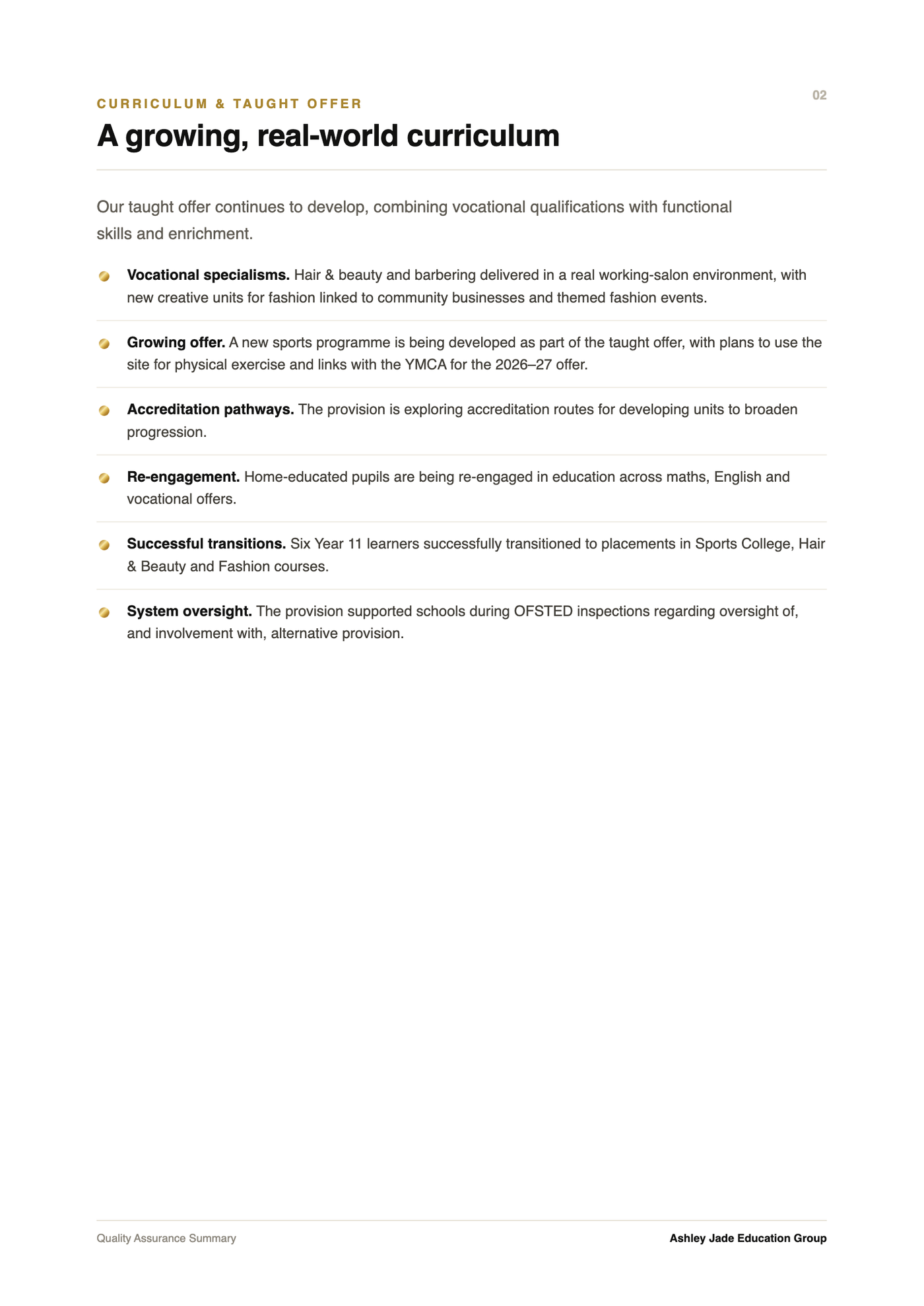
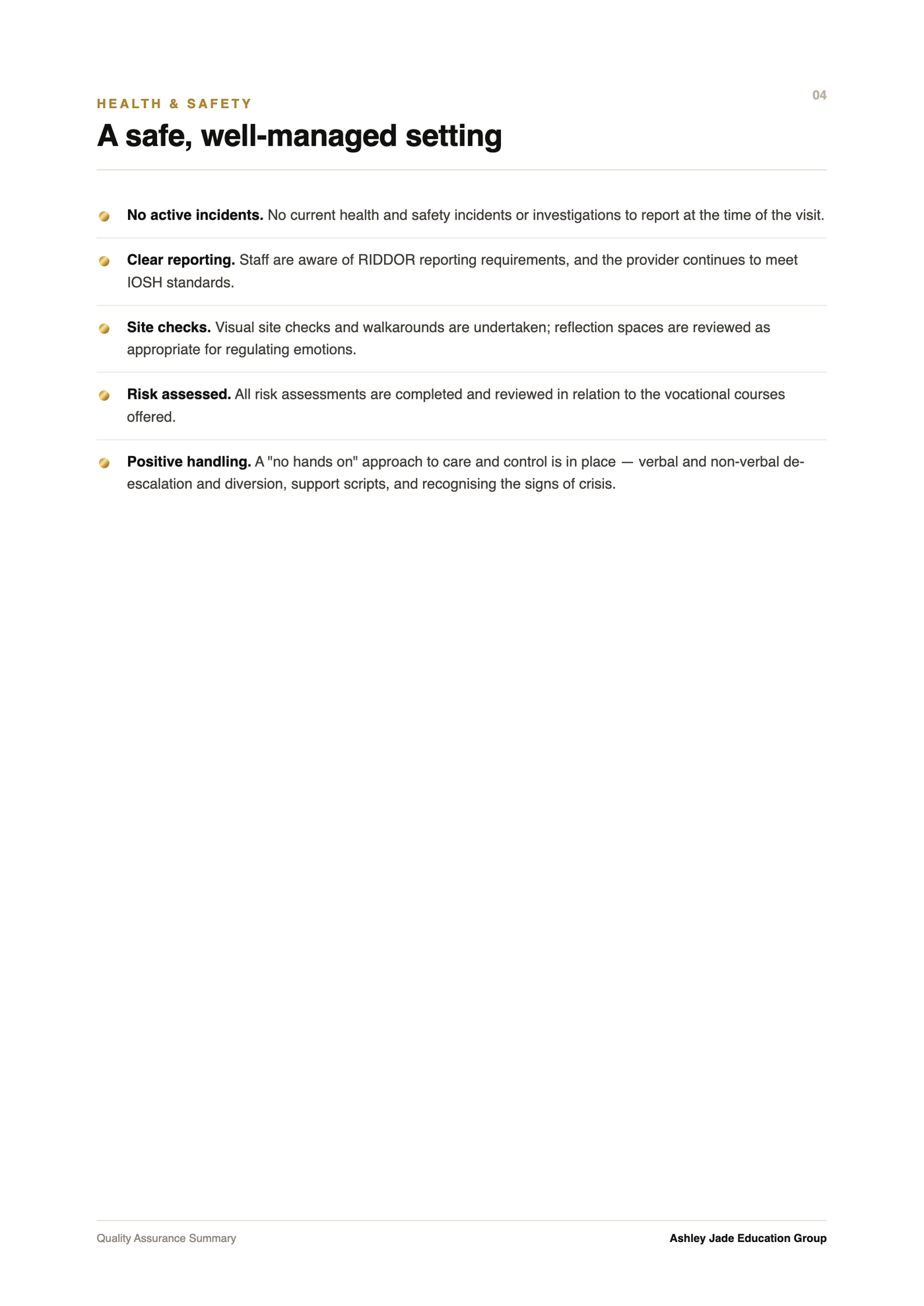
Flip through our Sefton Council quality assurance report — or download the full PDF.
Refer a young person
Schools and local authorities can make a referral in a few simple steps.